 Reviews


 Proudly American


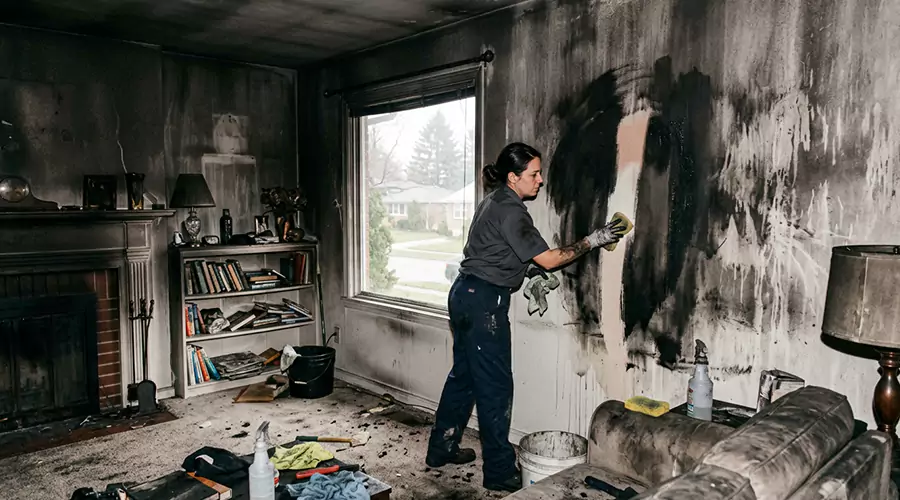
Yes, soot damage can become permanent when residue reacts with finishes, penetrates porous materials, or remains on surfaces long enough to cause staining or corrosion. Fast dry removal gives many walls or hard surfaces a better chance of recovery, while heat-damaged materials may require refinishing or replacement.
Soot is more than black dust. It can contain fine carbon particles or oily combustion residue depending on what burned.
What Makes Soot Damage Permanent?
Permanent soot damage occurs when residue changes the material rather than simply sitting on the surface. Porous products can absorb particles while metal surfaces may discolor or corrode after prolonged exposure.
Damage becomes harder to reverse when:
- Soot remains for several days.
- Residue is oily or acidic.
- The material is porous.
- Heat damaged the finish.
- Water smeared soot into a surface.
- Aggressive cleaning altered the material.
Soot damage should therefore be evaluated based on both contamination and the condition of the underlying material.
Which Materials Are Most Likely to Have Permanent Soot Damage?
Hard sealed surfaces are generally easier to clean than absorbent materials. Drywall or unfinished wood can hold smoke residue below the visible surface.
| Material | Risk of Permanent Damage |
|---|---|
| Glass | Usually low |
| Tile | Usually low |
| Sealed counters | Low to moderate |
| Painted drywall | Moderate |
| Unfinished wood | Moderate to high |
| Upholstery | Moderate to high |
| Insulation | High |
| Heat-damaged plastic | High |
Soot damage removal may restore appearance without fully removing odor when contamination has reached below the surface.
Can Soot Permanently Stain Walls?
Yes. Smoke residue can discolor painted walls when fine particles work into the finish. Oily soot can be especially difficult because rubbing it with water may create darker streaks. The correct sequence usually starts with dry removal.
A wall has a better chance of restoration when:
- Dry soot is vacuumed first.
- A suitable cleaning sponge is used.
- Wet cleaning follows only when appropriate.
- The surface is allowed to dry.
- Remaining staining is evaluated before repainting.
Smoke damage on walls may require stain-blocking primer after the residue itself has been removed.
Can Soot Permanently Damage Ceilings?
Ceilings can develop lasting discoloration because hot smoke rises and deposits residue across large upper surfaces. Textured ceilings are harder to clean because aggressive rubbing can damage the finish.
Permanent ceiling damage becomes more likely when:
- The texture absorbs oily residue.
- Heat discolors the coating.
- Firefighting water softens the drywall.
- Smoke odor penetrates the board.
- Cleaning removes the existing finish.
A badly affected ceiling may need refinishing even when the drywall itself remains structurally sound.
Can Soot Damage Metal?
Yes. Fire residue can contribute to corrosion on some metals because combustion byproducts may be chemically reactive. Appliances or hardware can look normal at first while later developing discoloration. Metal items deserve prompt cleaning after a fire.
Potentially affected materials include:
- Cabinet hardware
- Metal fixtures
- Appliance surfaces
- Tools
- Decorative metal
- Electrical components
Electrical equipment should not be cleaned or tested casually when it has been exposed to heat or firefighting water.
Can Furniture Recover From Soot Damage?
Some furniture can recover when soot remains on a durable finished surface. Upholstered pieces are more difficult because residue can reach internal padding.
Furniture repair is more practical when:
- The frame remains stable.
- The finish is not heat damaged.
- Soot is limited to the surface.
- Odor decreases after cleaning.
Replacement becomes more likely when the material is charred or deeply contaminated. Fire damage cleaning should not use the same method on finished wood that is used on tile or glass.
Does Waiting Make Soot Damage Worse?
Yes. Prompt cleaning matters because residue can settle into finishes over time. Fine particles can also be spread by normal household movement.
A general progression looks like this:
| Time or Condition | Possible Effect |
|---|---|
| Immediate exposure | Loose surface residue |
| Hours to days | Staining can deepen |
| Continued exposure | Odor penetrates porous materials |
| Improper wet cleaning | Smearing can worsen stains |
| Long delay | Some finishes may require refinishing |
The exact timing depends on the residue and material.
What Warning Signs Suggest Soot Damage May Be Permanent?
Permanent damage is more likely when cleaning improves little after several careful passes.
Watch for these signs:
- Dark staining remains after cleaning.
- Paint finish has changed permanently.
- Wood remains discolored.
- Metal begins corroding.
- Odor persists inside porous materials.
- Ceiling texture breaks during cleaning.
- Plastic surfaces are heat distorted.
- Upholstery remains smoky after treatment.
- Drywall paper is charred.
- Previously cleaned stains return.
Fire and smoke damage can therefore require restoration even after visible loose soot has been removed.
What Can You Check Yourself?
A small test area can show whether residue is sitting on top of the material or has changed the finish.
Try this process:
- Choose an inconspicuous area.
- Remove loose soot using a dry method.
- Apply a compatible cleaner when appropriate.
- Let the surface dry.
- Compare it with an unaffected area.
- Check for remaining discoloration.
Do not keep scrubbing when the coating itself begins coming off. At that point the problem has moved beyond normal cleaning.
Can Permanent Soot Damage Be Refinished?
Often, yes. Permanent staining does not always mean the material needs complete replacement. Some surfaces can be sanded or recoated once contamination has been removed.
Possible repair methods include:
- Repainting cleaned drywall
- Refinishing wood
- Replacing ceiling texture
- Polishing appropriate hard surfaces
- Replacing isolated damaged sections
Soot clean up should still happen before refinishing. Covering residue can leave odor behind.
When Should You Call a Professional?
Professional help is appropriate when soot covers several rooms or expensive materials are affected. It is also useful when smoke residue has entered HVAC components or when different surface types require different treatments.
Consider professional assessment when:
- Several rooms contain heavy soot.
- Valuable wood finishes are affected.
- Metal corrosion has begun.
- Upholstery holds strong odor.
- HVAC areas contain residue.
- Repeated cleaning damages the finish.
- Electrical components were exposed.
- Structural fire damage is present.
How Can You Reduce Permanent Soot Damage?
Early source cleaning offers the best chance of preventing lasting staining.
Useful actions include:
- Avoid touching soot with bare hands.
- Remove loose particles before wet cleaning.
- Test cleaners in hidden areas.
- Change dirty cloths frequently.
- Keep soot from spreading into clean rooms.
- Address residue before repainting.
Conclusion
Soot damage can become permanent when particles penetrate porous materials or chemically affect finishes. Fast dry cleaning improves the chance that walls or hard surfaces can be restored. Heat-damaged materials may still need refinishing or replacement even after soot is removed. If careful cleaning leaves persistent stains or odor, professional assessment can identify whether restoration is still practical.
Frequently Asked Questions
Does soot permanently stain paint?
It can. Some stains remain even after cleaning and require stain-blocking primer before repainting.
Can soot ruin wood furniture?
Yes, when residue penetrates unfinished wood or heat damages the finish. Surface soot on sound finishes may still be removable.
Can soot damage stainless steel?
Smoke residue can discolor or contribute to corrosion on metal surfaces if it remains for too long.
Does soot damage get worse over time?
It can. Residue may become more difficult to remove as it settles into finishes or reacts with materials.
Can soot be painted over?
It should be cleaned first. Painting directly over residue can lead to odor or staining problems later.
Is permanent soot staining the same as structural damage?
No. A surface can remain stained while still being structurally sound and suitable for refinishing.